Campus student organization for graduates and undergraduates
Story U.
Story U. is a campus student organization for graduates and undergraduates interested in storytelling performance. The club meets twice per month to tell stories for peer coaching and to attend mini workshops on a variety of topics of interest to the club members. Along with the storytelling program faculty, Story U. tellers are available to tell stories for your event, whether it be telling in area schools or at festivals and community events. . Email storytel@etsu.edu for information on how you can bring us to your event. Request information.
Would you like to book Story U. for your event or class?
Storytelling and the oral tradition are the grandparents of the literature and the entertainment we enjoy today. Storytelling fulfills the preservation of traditions, cultures, and values that thrived before written and electronic communication. Our region hosts the National Storytelling Festival in Jonesborough and is known worldwide as a cradle of the art of Storytelling.
Schools can host a program for the entire student population, or for individual classrooms. In addition to this, sometimes members have particular stories which may fit a school theme or current unit of study. Our desire is to make your Story U experience the best it can be and we want to be used as a teaching tool. The opportunities are endless, so contact us for more information today.
Suggested Venues for Story U Bookings
There are many types of venues that may want to sponsor a Story U. performance, residency, or workshop. These can include:
Festivals
Museums
K-12 schools
Libraries
Corporate events
Civic Organizations (Boys Scouts, Girl Scouts, Boys and Girls Club, Rotary, Kiwanis)
Training Workshops
Parties
Insert your own here: the possibilities are endless.
Speech and Debate Team
ETSU Debate: Recognize Your Potential
The East Tennessee State University Speech and Debate Team is a student organization created to introduce students to creativity, organization, debate, and a way to have fun with all of these college demands. We focus on the activities of Parliamentary Debate and Individual Events in public speaking, such as literature interpretations, limited preparation events, and public address events. We are sure that the council has something to offer to everyone, and that it will sharpen the skills necessary to not only win an argument or speak well in public, but to impress potential employers and communicate well with everyone that you encounter. Members may choose to participate in none, one, or multiple competitive events. All members, competitive or not, serve important roles in the organization. Also, the ETSU Speech and Debate Team is one of the few clubs on campus where students can earn college course credit for being on the competitive side of the council.
For more information, email messmer@etsu.edu.
-
About Us
The East Tennessee State University Speech and Debate Team is a student organization created to practice the arts of speech and debate. This student centered group meets each week during the spring and fall semesters. Some team members may choose to join the competitive team and compete across the state of Tennessee in local, regional, and state competitions. For those who prefer to work behind the scenes, we have fundraisers, organizers and planners positions available.Everyone is encouraged to practice their debate skills during our weekly meetings. Join us and write your name in the history book of the East Tennessee State University Speech and Debate Team!
Advisors
Laughton Messmer, Director
messmer@etsu.eduDonna J Taylor, Assistant Director
taylordj1@etsu.edu -
Social Media Links
-
In the News
ETSU Debate and Forensics team member attending National Tournament (03/07/2023).
Brooke Hornberger will be attending the American Forensic Association (AFA) National Speech Tournament in Santa Ana, CA at the beginning of April. She will be representing the ETSU Speech and Debate Team in the categories of Dramatic Interpretation and Prose Interpretation.
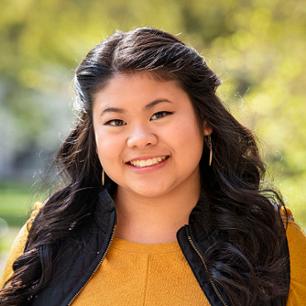
Big News from the Debate and Forensics teams (02/28/2023)
Over the past several weeks, the Debate and Forensics team has been well represented in tournaments.
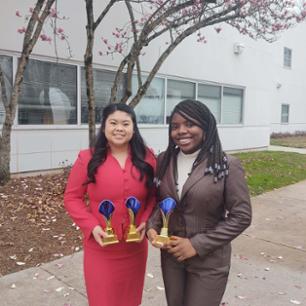
First Brooke Hornberger and Ipinoluwa Akintola took home awards at the 5th Annual Tennessee Valley Tournament, held at Pellissippi State Community College. Brooke took home first place in Prose and Dramatic Interpretation. while Ipinoluwa brought home first place in Impromptu.
Continuing the team's success, they attended the TIFA state tournament, hosted by Belmont University.
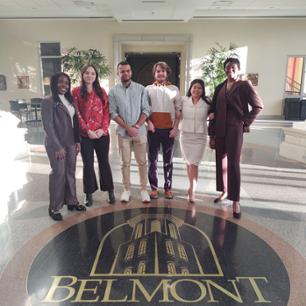
The awards kept coming at TIFA, with three teammembers taking home honors. Kendall Robertson finished 6th place novice speaker and made it to the quarterfinals for IPDA Novice Debate. Justin Washington also had success in the IPDA Novice Debate competition, breaking to the octofinals. Ijeoma Chukwu-Amaechi finished as the 6th place finisher for Radio Broadcasting individual event.
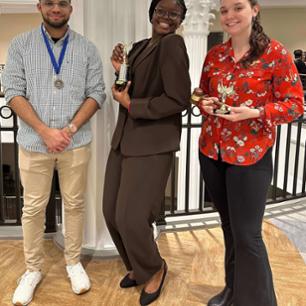
In addition to these tournaments, Brooke Hornberger also was able to compete in the Good Life Swing Asynchrous Tournament hosted by the University of Nebraska-Lincoln. Continuing her winning ways, she was able to bring home 4th place in Prose and 5th place in Dramatic Interpretation.
Great job to all the team members for representing themselves and the team in these events.
ETSU Speech and Debate Press Release (11/14/22)
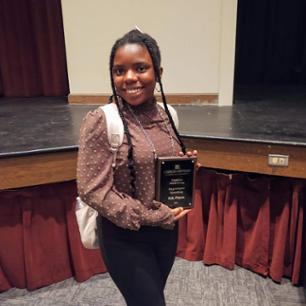
The ETSU Speech and Debate Team attended the Tennessee Porch Swing Tournament this past Saturday. Freshman and Creative Arts Scholarship recipient Ipinoluwa Akintola attended and brought home the fifth-place trophy for Impromptu Speaking. We are proud of our students and their successes!
The ETSU Speech and Debate Club meets every Thursday night at 6:00 p.m. in Campus Center Building Room 208A. Students interested in learning more about the program are welcome to attend. For inquiries contact Director Laughton Messmer at speak@etsu.edu.
ETSU Speech and Debate Press Release (10/8/22)
The ETSU Speech and Debate Team attended the Bulldog Tournament hosted online by Concordia University. Senior Brooke Hornberger competed in Prose and took home the first-place trophy. Brooke said of her experience competing asynchronously at the tournament in Nebraska, “Speech is entering an area of flexibility and as a college student it’s really refreshing to be able to perform.” Brooke is looking forward to competing in many more tournaments this academic year and has her sight set on the national tournament.
The ETSU Speech and Debate Club meets every Thursday night at 6:00 p.m. in Campus Center Building Room 208A. Students interested in learning more about the program are welcome to attend. For inquiries contact Coach Laughton Messmer at speak@etsu.edu.
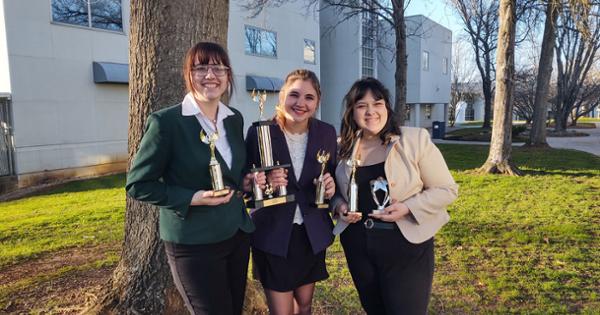
Congratulations are in order for the Speech and Debate team! During the recent TIFA State Tournament (2022), the team placed the following award winners:
--Kristina Taylor; 3rd Place in Prose
--Kristina Taylor; Top Novice Speaker Award in Prose
--Emily Greene; 4th Place in Prose
--Katelyn Maxwell; 4th Place in Programmed Oral InterpretationETSU Speech and Debate Team brings home top awards: Links to an article in the Johnson City Press
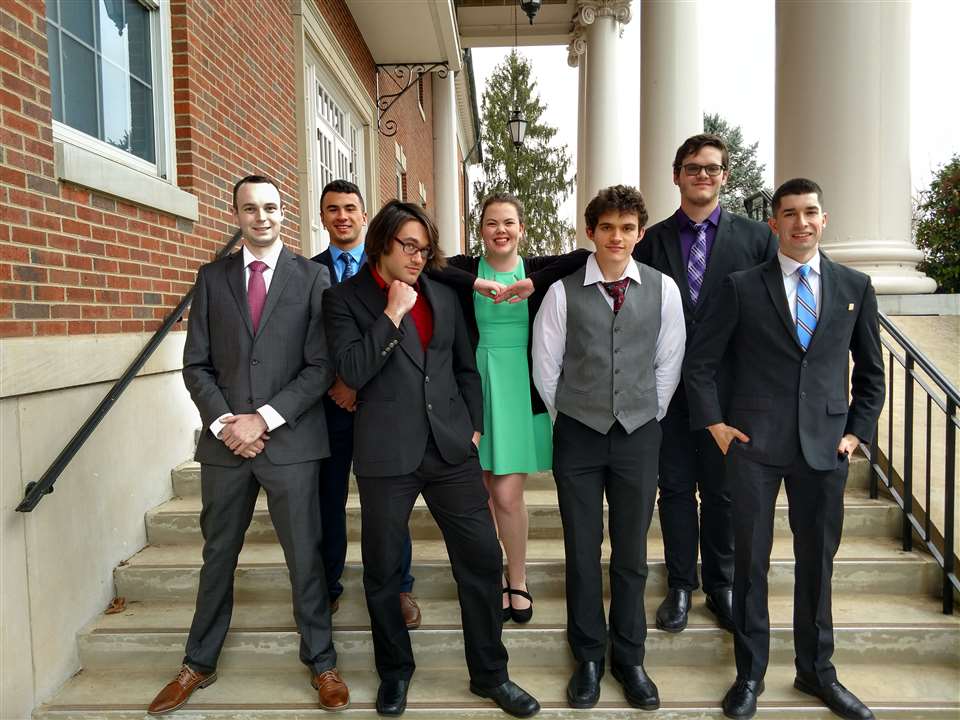
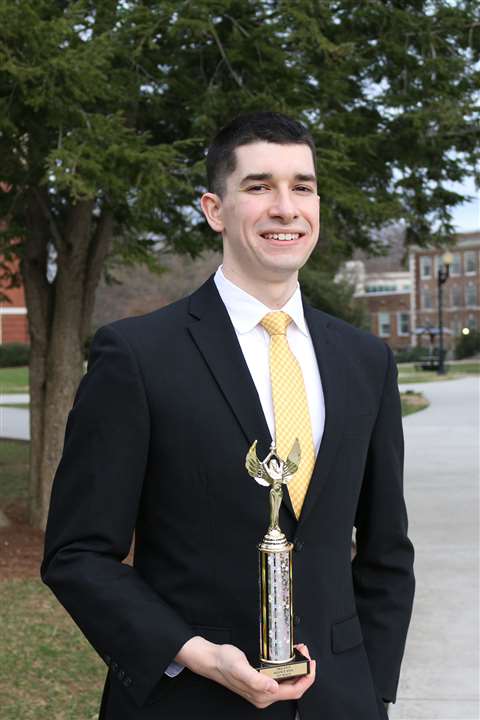
Five Questions ETSU Debate Team member discusses importance of civil debate in polarized society: Links to an article in the Johnson City Press.
-
Competitive Events
Parliamentary Debate:
Parliamentary debate is based loosely on the British model of parliament. Debaters use sound reasoning, logic, persuasion, wit, and rhetorical skill to argue their stance. This debate format consist of two teams, the Government and the Opposition, delivering their cases either in favor of or in opposition to a resolution which may cover a variety of political, social, economic, or philosophical topics. Debaters are given 15 minutes preparation time prior to debate beginning.Oral Interpretation Events Dramatic Interpretation:
A representation of one or more characters from a play or plays. Material may be from stage, screen, or radio. Use of manuscript is required. Maximum time limit is 10 minutes, including introduction.Poetry:
Presenter will have 10 minutes to deliver a manuscript presentation on a selection or selections of poetry (play cuttings are prohibited).Prose:
Presenter will have 10 minutes to deliver a manuscript presentation on a selection or selections of prose material (play cuttings are prohibited).Dramatic Duo:
Two individuals will have 10 minutes to deliver a cutting from a play, humorous or serious, involving the portrayal of two or more characters. Material may be from stage, screen, or radio. This is not an acting event; thus no costumes, props, lighting, etc. are to be used and focus should be centered on audience.Program Oral Interpretation:
A 10 minute program from two of the three recognized genres of competitive interpretation (prose/poetry/drama).Extemporaneous Speaking:
Contestants will be given 30 minutes to prepare a speech on one of three topics in the general area of current events. The speaker will have 7 minutes to deliver their presentation with limited notes.Impromptu Speaking:
Speakers will have a total of 7 minutes for both preparation and speaking. Timing commences with the acceptance of the topics sheet.Informative Speaking:
Speakers will deliver a 10 minute speech that increases the audience's knowledge on a factual topic. Visual aids that enhance/reinforce the message are permitted. The speech must be delivered from memory.Persuasive Speaking:
Speakers will deliver a 10 minute speech that persuades or moves audience to action. Visual aids that enhance/reinforce the message are permitted. The speech must be delivered from memory.After Dinner Speaking:
Speakers will deliver a 10 minute humorous speech while incorporating a serious point through humor. The speech should reflect the development of an idea through humor (not a stand-up comedy routine). The speech must be delivered from memory.Communication Analysis:
Speakers will deliver a 10 minute critical analysis of any rhetorical artifact. The speech must be delivered from memory. -
Awards
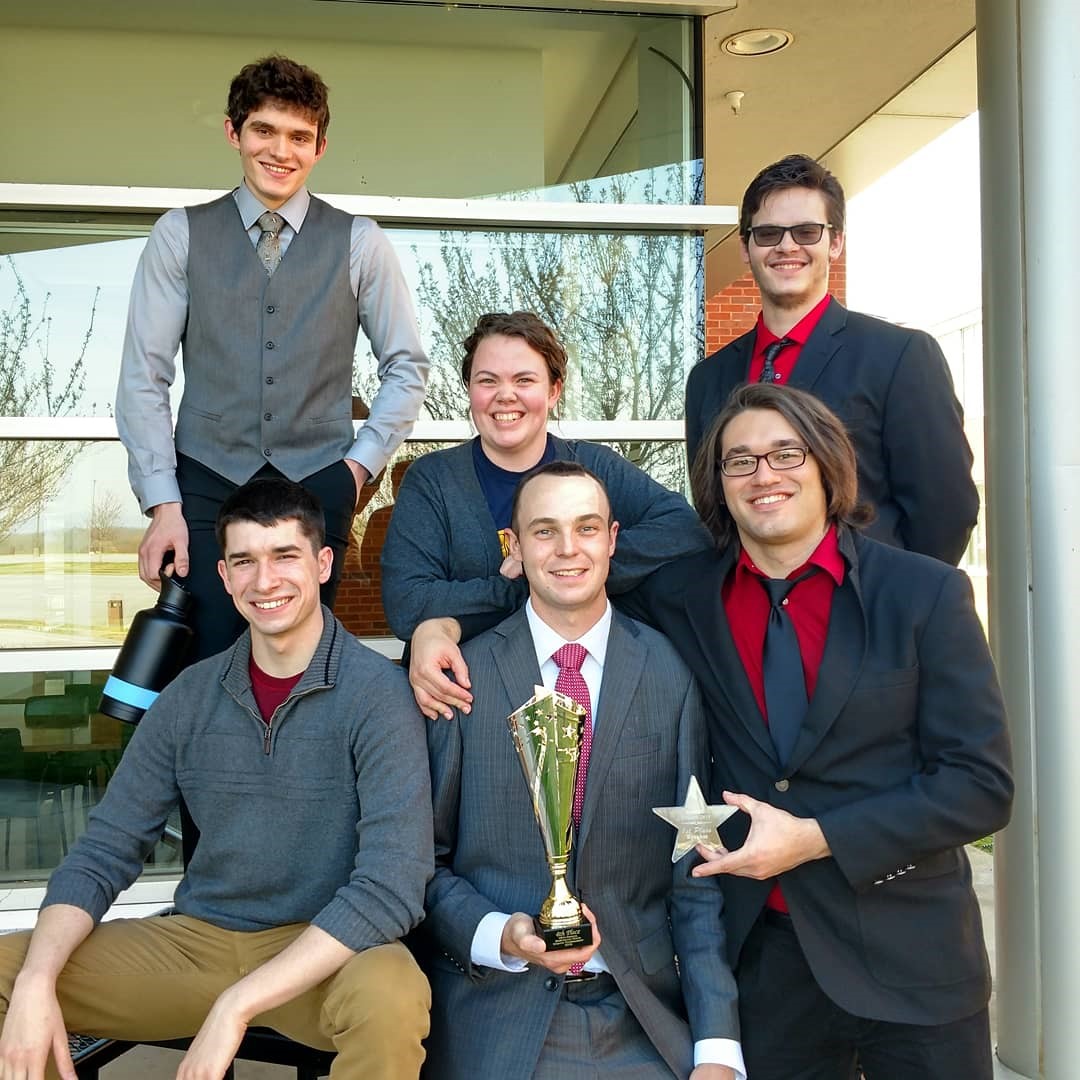
ETSU Parli Plunder, TN
2016-2017
3rd Place Novice Speaker
3rd Place Novice Team2015-2016 awarded:
3rd Place Novice Team
4th Place Novice Team
5th Place Novice Team
1st Place Speaker Award
3rd Place Speaker Award.2013-2014 awarded:
1st Place Open Team
3rd Place Novice Team
4th Place Novice Team
1st Overall Open Speaker
2nd Place Overall Open Speaker
1st Place Overall Novice Speaker
3rd Place Overall Novice Speaker
4th Place Overall Novice Speaker2012-2013 awarded:
1st Place Open Team
3rd Place Novice Team
4th Place Novice Team
1st Place Overall Open Speaker
2nd Place Overall Open Speaker
1st Place Overall Novice Speaker
3rd Place Overall Novice Speaker
4th Place Overall Novice Speaker.2011-2012 awarded:
1st Place Overall Speaker
2nd Place Overall Speaker
5th Place Overall Speaker
2nd Place Team award.2008-2009 awarded:
3rd Place Team2010-2011 awarded
5th Place Team
3rd Place Overall Speaker
4th Place Overall Speaker.Carson-Newman Porch Swing, TN
2018-2019
5th Place Public NarrativeWalters State Smokey Mountain Tournament
2017-2018
1st Place Novice Speaker
4th Place Novice Speaker
8th Place Novice Speakers2016-2017
3rd Place Novice Speaker2015-2016 awarded:
1st Place Beginning Novice Speaker
6th Place Beginning Novice Speaker
8th Place Top Novice Speaker.2014-2015 awarded:
Varsity Semi-Finalists
1st Place Novice Division
4th Place Novice Speaker.2010-2011 awarded:
1st Place Team
1st Place Overall Speaker.2009-2010 awarded:
2nd Place Team.Northeast State Community College Spring Fling
2018-2019
4th Place Novice Team
1st Place Overall Speaker Award2016-2017
2nd Place Overall Speaker Award2015-2016 awarded:
3rd Place Novice Team
4th Place Novice Team - 2nd Place Speaker Award
7th Place Speaker Award.2014-2015 awarded:
1st Place Team.
7th Place Speaker Award
3rd Speaker Award.2013-2014 awarded
6th Place Overall Speaker
7th Place Overall Speaker.2012-2013 awarded:
6th Place Overall Speaker.
7th Place Overall Speaker.2010-2011 awarded:
2nd Place Team.
3rd Place Team.2009-2010 awarded:
2nd Place Team
3rd Place Team.TIFA (TN Intercollegiate Forensics Association) State Tournament
2018-2019
State Champion in IPDA
Quarter Finalist in IPDA
Octo-finalist in IPDA
1st Place Novice Speaker2017-2018
2nd Place Radio Broadcasting
2nd Place Impromptu Speaking
4th Place Radio Broadcasting
6th Place Informative Speaking
6th Place Radio Broadcasting
6th Place After Dinner Speaking2016-2017
3rd Place Prose Interpretation
5th Place Dramatic Interpretation
5th Place Radio Broadcasting
6th Place Poetry Interpretation2012-2013 awarded
Quarter Finalist Novice Team
Quarter Finalist Open Team2011-2012 awarded:
6th Place Persuasive Speaker award2010-2011 awarded:
Two Quarterfinal Teams
3rd Place Overall Speaker
5th Place Overall Speaker2009-2010 awarded:
3rd Place Debate SweepsLion’s Pride Debate Tournament, Bryan College, TN
2018-2019
1st Place Four-Year College Team Sweepstakes
3rd Place Varsity Speaker
3rd Place Novice Speaker
6th Place Novice Speaker
3rd Place Novice Team
3rd Place Varsity Team
4th Place Novice Team
6th Place Varsity Team -
Course Credit Info
COMM 2325: Forensics and Debate Team - Syllabus
Course Description: COMM 2325 is designed to help students prepare for, deliver and critique both formal and tournament arguments and debates. Learning these concepts will aid in the developing of critical thinking skills, extemporaneous speaking, decision making as well as enhance listening skills. Team members will also learn how to formulate cases based on stock issues of debate, effective research skills on current and contemporary issues, and deliver logically valid arguments. Those participating in Individual Events will display an understanding of event selection, topic selection and organization skills pertaining to said event.
Required Text: The instructors will provide materials throughout the semester.
Course Requirements:
1. It is vital to attend every club meeting and practice session. Team members must attend weekly team meetings as well as any scheduled practices. Only two team meetings or schedules practices without penalty are allowed. On the third missed team meeting or scheduled practice and every subsequent missed team meeting will decrease the final grade by 10%.2. Team members will also participate in official tournaments as part of the Forensics and Debate Team. Enrolled participants will compete in one tournament for each registered credit hour.
3. Following each tournament, each member must submit a self-evaluation of his or her participation and preparations for said tournament.
Course Direction:
Individual Events/Specific Requirements:1.Self-evaluation after each tournament.
2.Demonstration of quality verbal and nonverbal delivery techniques, speech construction, and the ability to employ sound research.
3.Creation of compelling and effective presentations in various and appropriate styles.
Parliamentary Debate:
1.Self-evaluation after each tournament.
2.Demonstrate an understanding of the rules and terminology of parliamentary debate.
3.Construct cases that utilize a full understanding of stock issues and case files.
4.Effectively argue parliamentary cases with sensitivity towards judging criteria as well as incorporating note taking into case construction.
Grades: Here is how your grade is configured so we will have no confusion.
Participation: 40%
Preparation: 40%
Self-Evaluations: 20%Participation
Participation grades will come from both participation in practices as well as tournaments. For more information see the requirements section above.
Preparation
Before members participate in tournaments they must fully prepare for the event in which they are competing. For debaters this means having a current case file and obtaining supplies (i.e. dictionary, pens, paper) from the instructor before the day of the tournament. For members competing in individual events this means writing and researching an original work, as well as choosing and interpreting an existing work. For members who will be participating in after dinner speaking, impromptu, or extemporaneous speaking events, sample topics and practice speeches must be on hand at all times.
Self-evaluations
Following each tournament, members are required to write a 500-750 word paper that functions to evaluate the member’s performance in said tournament. Each evaluation should highlight strengths, note areas where improvement is need and give a clear plan to improve in said areas, as well as include a list of lessons learned from the tournament experience.
-
Rules of Debating
The Basics
There are two teams: the Government Team and the Opposition Team. Each team has two members. The Government has the “Prime Minister”/ “PM” and “The Member of Government”/ “MG.” The Loyal Opposition has the “Leader of the Opposition”/ “LO” and “The Member of Opposition”/ “MO.”The Government is to argue the resolution; the resolution is the topic that the debate is based on. The Government is always FOR the resolution. They are the group that brings forth the case. The Loyal Opposition is to argue AGAINST the Government and the resolution.
The two teams must convince the Judge, called the Judicator or Mister/Madam Speaker of the House, why their teams have done better than the other team in the debate and why they should win the debate. The Judicator will also decide how good the speakers were by giving speaker points.
Anything is debatable in Parliamentary Debate. The goal of Parliamentary Debate is to argue general knowledge that is known to the average person off the street.
Scoring
When it comes to scoring, many tournaments do not have the score card. There is a point system based on how the speakers have done. It is best to fill it out but you do not have to use it to make your points.The score is from 0 to 30 with the highest and perfect score being 30.
30 The Greatest
29 Almost the best
28-25 Above Average
24-20 Average
19-16 Below Average
15-12 Horrible
11-1 Don’t go there
0 No ShowThe ranking is 1-4 with the best speaker being 1 and the worst 4. It is possible for the person with the highest points not to have the best rank. There can not be a tie on points and rank on the score sheet. The points and rank are used for speaker awards and should be taken seriously. Finally, you decide which team convinced you to vote for their side and was fair to the procedure of debate.
Time
After the topic resolution is announced, both teams have 15 minutes to prepare the topic. The judge must keep track of the 15 minute time limit. The main speaker of the Government is the Prime Minister. The main speaker for the opposition is the Leader of Opposition.Following is the speech pattern and maximum time that each speaker can talk:
Prime Minister First Speech : 7 minutes
Leader of Opposition First Speech: 8 minutes
Member of Government Constructive: 8 minutes
Member of Opposition Constructive: 8 minutes
Leader of Opposition Closing: 4 minutes
Prime Minister Closing: 5 minutes
The PointsPoint of Information
After the first minute of a speech and the last minute of a speech, you will or the timekeeper will need to slap the table or give a one minute sign. From the time between the hand smacks or the one minute signs, a team can ask questions. This is called a Point of Information.* It is preferred for the speaker to face you to ask the current speaker what the question is. The speaker can limit questions, hold off questions, or neglect it all together. It is rude to hold off or neglect but not to limit the questions.*This can only be used during the first four speeches.
Point of Order
Personal Privilege are questions asked to the judicator about distracting conditions like closing the window or door and even to having the “peanut gallery”/ spectators to be removed if they are being too loud.
Clarification Issue is when the other team misinterprets or misquotes what the other team has stated.
New Information is when new information was brought forth that was not during any of the first four speeches and used during the last speeches of the Leaders. This would cause the new argument to be thrown out of the debate.
Ad Hominem Fallacy is when the a team attacks the competitor/s not the case.
Case Req.
The Government team must be for the resolution, must define the resolution, and make a debatable case. The definitions must be defined. There must be a debate type.Debate Types:
Policy- Solve a problem
Fact- Resolution is true
Value- Which is better
There must be judging criteria.
*These can be challenged by the opposition but it is your choice which side is right; Please do not reveal your choices during the debate.The deal is that the Opposition must point this out during speeches. If the opposition does not challenge the point it is in the government favor. If the government drops the Opposition challenge, then it goes to the Opposition favor.
Think of it being “No Call, No Foul,” but you get to decide in the end which is right and wrong.
Last Note:
The Opposition can make a counter-case but this does not happen very often. When the Opp makes a case, it does not have to follow the strict guidelines the government must have. -
Helpful Links
For more information on East Tennessee State University, visit the main web site of the university.
East Tennessee State University is located in Johnson City, TN, just miles from both the Virginia and North Carolina boarders. Visit in person or on the web at ETSUTo learn more about ETSU's Department of Communication, visit us on the web.
The Department of Communication at ETSU is home to six different divisions as well as a Master of the Art program in Professional Communication. Find out more today at CommunicationAmerican Parliamentary Debate Association
The American Parliamentary Debate Association is a great resource for parliamentary debaters of all levels. Check them out today at APDANational Parliamentary Debate Association
The National Parliamentary Debate Association is the oldest organization dedicated to parliamentary debate in the United States. Visit them at NPDAInternational Debate Education Association
Take debate worldwide at IDEA
For more details and information stop by a club meeting or e-mail ETSU Speech and Debate Team at messmer@etsu.edu.
Speech and Debate Team Meetings
Thursdays, 6:00 PM
Campus Center Building RM 208A
We hope to see you there!